How to Select a Yacht Shipyard in Türkiye
By Maréa Yachts · Reviewed 15 July 2026
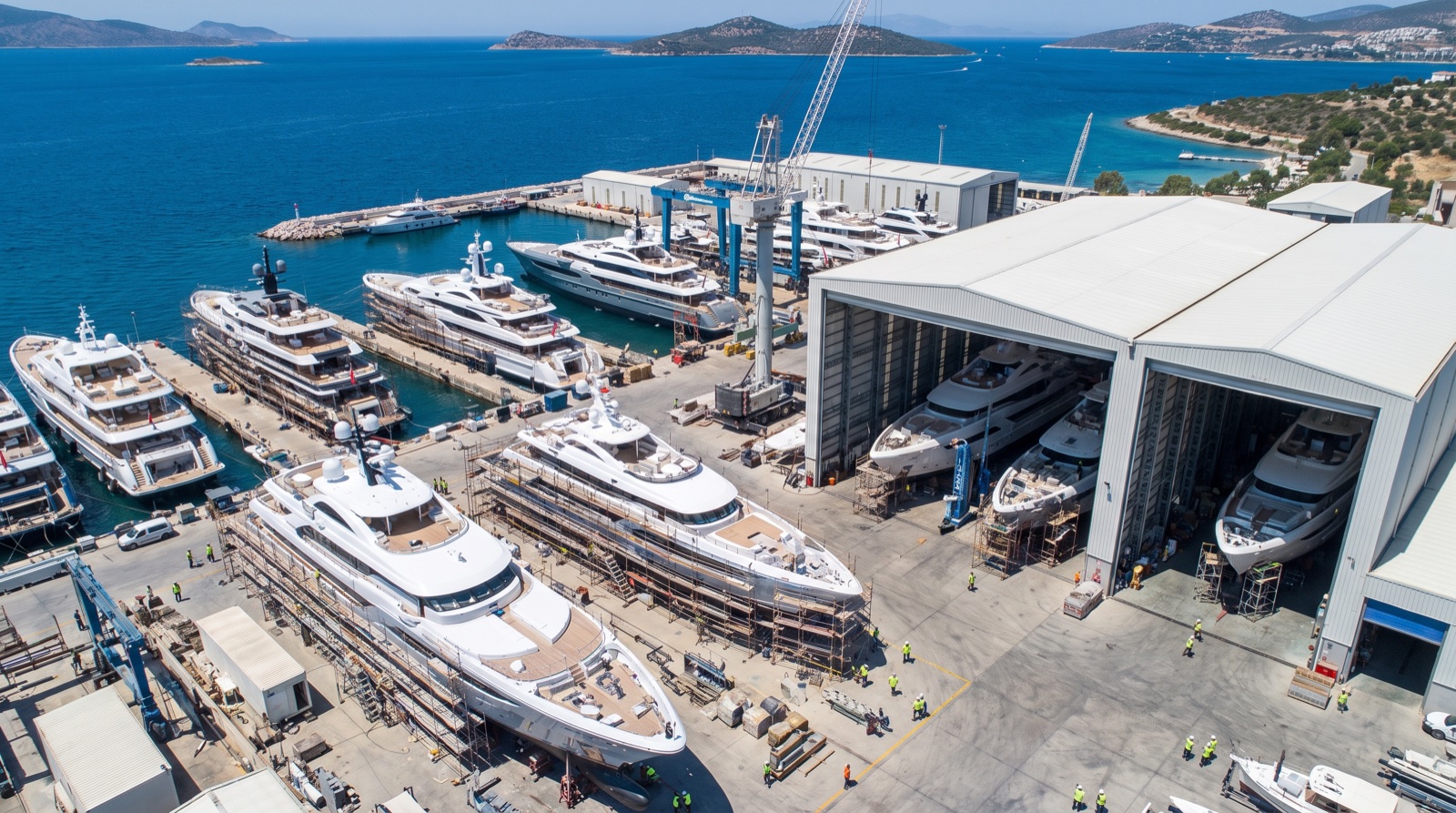
Choose a Turkish yard by matching its delivered work to your project — material, size band, motor or sail, custom or semi-custom — rather than by reputation alone. Then verify: reference vessels you can visit, owners and captains you can speak to, boats in build you can inspect, and experience with your intended class society and flag. Everything else is settled in the contract, with your own lawyer and technical adviser beside you.
Why Türkiye is taken seriously as a building country
Türkiye has an established yacht-building sector with yards working in steel, aluminium, composite and wood, and a deep tradition of timber and joinery craft that feeds directly into yacht interiors. Skilled labour is available, and the supporting trades — engineering, paint, fit-out — cluster around the main building regions. None of this means every yard is the right yard for you. It means the country is a credible place to build, and that the real work is choosing well within it.
Match the yard to the project first
Most disappointment in new build starts with a mismatch that was visible from the beginning. Before you compare quotations, narrow the field on four questions:
- Material. Steel, aluminium, composite and wood are different industries under one roof. A yard fluent in composite is not automatically fluent in aluminium.
- Size band. Yards have a range they build repeatedly and comfortably. A project meaningfully above that range asks the yard to learn on your boat.
- Motor or sail. Rig, keel and sailing systems are their own discipline. So are large engine installations and the systems around them.
- Custom or semi-custom. A semi-custom platform buys you a proven hull and a shorter, more predictable path. Full custom buys you freedom and costs you time, engineering and risk.
The evidence to ask for
Ask for things you can check yourself, not things you have to take on trust:
- Delivered reference vessels you can visit. Boats that have been in service for a few seasons tell you more than a freshly polished handover.
- Owners and captains you can speak to. Ideally without the yard in the room. Ask what went wrong, how it was handled, and how the yard behaved after delivery.
- Vessels currently in build. Walk them. Look at the welding, the wiring runs, the tidiness of the shed, how systems are being installed rather than how they photograph when finished.
- Class and flag experience. Classification and flag set the rules the vessel is built and certified to, and bring surveys and approvals throughout construction. A yard that has done it before with your intended class society and flag knows the documentation rhythm. Requirements vary with vessel size and intended use, including whether you may charter — confirm them early with your technical adviser.
In-house capability versus subcontracting
Ask plainly which work the yard performs itself and which it subcontracts — typically interior joinery, paint and parts of the engineering. Neither answer is wrong. In-house work gives the yard direct control over quality and schedule. Good subcontractors can be excellent, and many yards use them by design. What matters is that you know which is which, who carries responsibility when a subcontracted trade slips, and whether the yard has worked with those firms before.
Project management, drawings and approvals
The build you experience is largely the project management you agreed to. Establish who your single point of contact is, how drawings are issued and approved, how long you have to review them, and what happens to schedule and price when you change your mind — because you will. Ask how variation orders are priced and recorded, and how progress is reported. A clear, written approvals process protects the yard as much as it protects you.
Contract fundamentals — with your lawyer
Do not negotiate a build contract on goodwill. With independent legal advice, agree at minimum:
- The specification. A detailed technical specification and drawing list forming part of the contract. Ambiguity here becomes cost later.
- Payment milestones tied to verifiable progress — physical stages a surveyor can confirm, not calendar dates.
- Refund guarantees covering instalments already paid, so your money is protected if the build cannot be completed.
- Penalties and remedies for late delivery or failure to meet contractual performance.
- Warranty — its length, what it covers, and how defects are handled once the yacht has left the yard.
- Delivery terms — where and in what condition the vessel is handed over, and what sea trials must demonstrate first.
Terms, guarantee structures and their availability vary between yards and projects. Have them reviewed by a lawyer who works in this field.
The human factor
You will be in contact with these people for years, often about awkward subjects. Notice how they answer difficult questions during the tender stage — that is your preview. Is there English-language project management, or is everything mediated through a translator? How quickly do they respond, and how do they behave when the answer is bad news? A yard that says "that will cost more and take longer" early is worth more than one that agrees to everything.
Visit, and visit again
Go in person, more than once, and if you can, unannounced for at least one visit. Spend time in the sheds rather than the meeting room. Look at the boats in build, watch how the workforce operates, and see whether the standard of unfinished work matches the standard of the finished photographs. If you cannot make every visit yourself, appoint an independent owner's representative or surveyor who can.
How do I know if a Turkish yard can build my type of yacht?
Match the yard's delivered vessels to your project on three axes: construction material (steel, aluminium, composite or wood), size band, and type (motor or sail, custom or semi-custom). A yard that has repeatedly delivered boats close to your specification is a very different proposition from one that would be attempting it for the first time.
What evidence should I ask a shipyard for?
Ask for delivered reference vessels you can visit, owners or captains you can speak to unaccompanied, vessels currently in build that you can inspect, and the yard's experience with the classification society and flag state you intend to use.
Why do classification and flag matter when choosing a yard?
Class and flag set the rules the vessel must be built and certified to, and they involve surveys and approvals throughout construction. A yard that has worked with your intended class society and flag already knows the documentation and inspection rhythm. Requirements vary by vessel and intended use, so confirm them with your technical adviser.
Should I visit the shipyard in person?
Yes. A yard visit shows you the sheds, the workforce, the standard of work on vessels currently in build, and how the people you would work with respond to questions. Nothing in a brochure substitutes for it, and it is worth doing more than once.
Related reading: New yacht build in Türkiye · The early stages of a new build