What to Check Before Buying a Used Yacht
By Maréa Yachts · Reviewed 15 July 2026
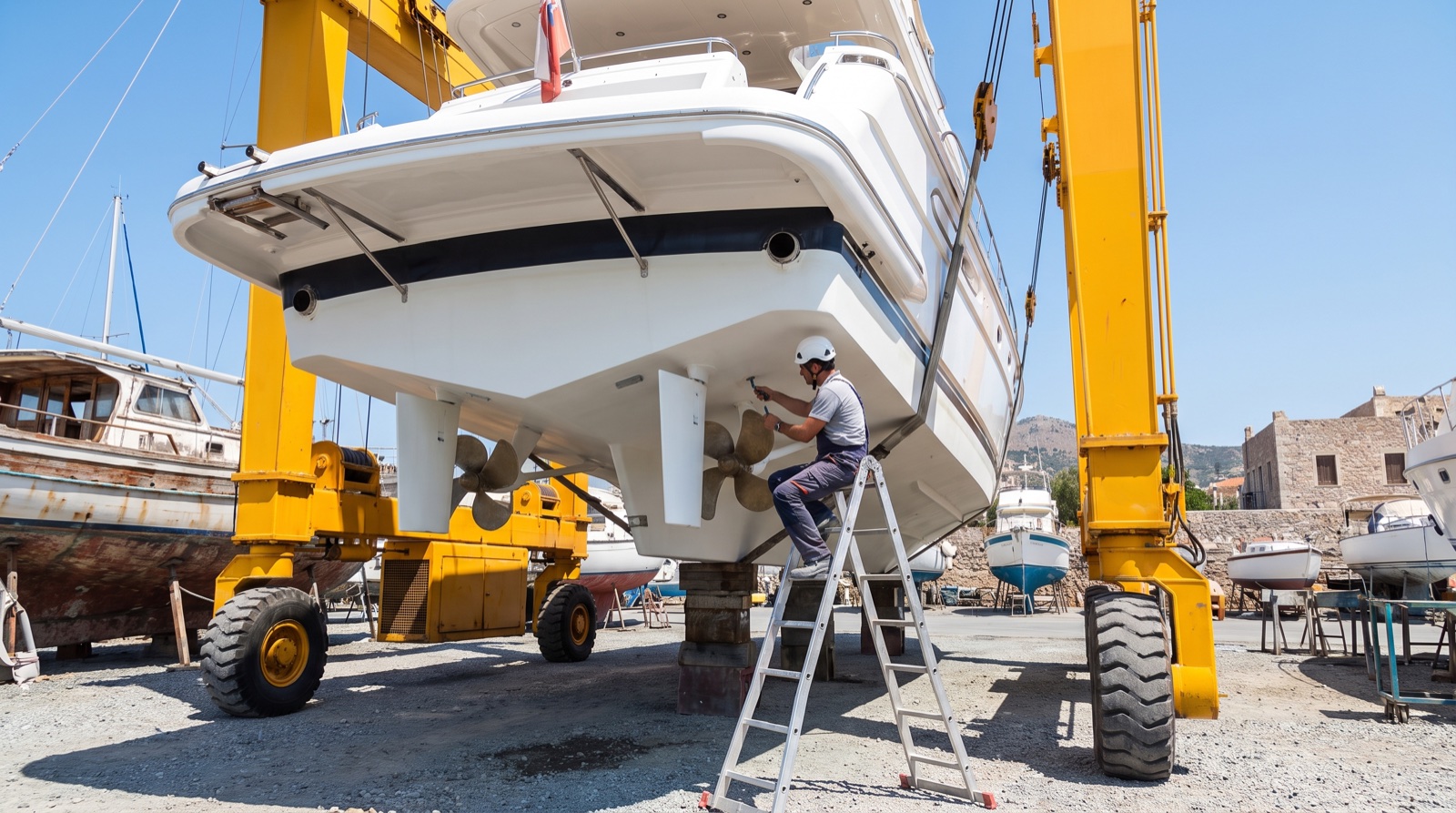
Before buying a pre-owned yacht, make your offer subject to survey and sea trial, and commission both yourself so the surveyor answers to you. Check the structure, machinery and systems in person, and check the paperwork just as carefully — ownership, flag, VAT or import status, and service records. If what you find does not add up, renegotiating or walking away is a perfectly good outcome.
Why the survey and sea trial matter
A yacht is not a car with a service book you can read in five minutes. Its condition is the sum of how it was built, how it was used and how honestly it was maintained — and most of that is invisible from the dock on a sunny afternoon. An independent condition survey, carried out with the yacht hauled out, is the only reliable way to see the hull, running gear and structure. A sea trial is the only way to see the yacht doing the thing you are buying it to do.
The important word is independent. The buyer commissions the surveyor and the surveyor reports to the buyer. A report supplied by the seller may be perfectly honest, but it was written for someone else, at some other point in time, for some other purpose.
Hull and structure
What you look for depends on the material. On a GRP hull, moisture readings and blistering raise the question of osmosis — how serious it is, and whether it is a cosmetic annoyance or a structural project. On steel and aluminium, corrosion is the theme: bilges, tank tops, weld seams, and galvanic issues around fittings and anodes. On timber, fastenings and fresh-water ingress. Everywhere: keel and rudder attachments, through-hulls and seacocks, and any sign that a past grounding or impact was repaired quietly.
Engines and generators
Ask for hours, and then ask for the evidence behind them. Service history matters more than the number: an engine with high hours and complete records is often a safer proposition than a low-hour engine that sat unused for years. Oil analysis is inexpensive relative to what it can reveal, and worth doing on main engines and generators alike. Watch a cold start. Note smoke, temperatures and vibration under load during the sea trial, and treat gearboxes, shafts, seals and stabilisers as part of the same conversation.
Systems
Systems are where costs hide. Electrics — the switchboard, the wiring runs, the batteries and their age — deserve real attention, as do plumbing, black and grey water, air-conditioning and the watermaker. Every one of these is quietly expensive to put right, and every one of them is easy to skip on a viewing because it looks fine when nothing is switched on. Ask for everything to be run.
Rig, sails, tenders and toys
If it is a sailing yacht, the rig has its own timeline: standing rigging age, mast and furling gear, winches, and the honest condition of the sail wardrobe rather than the inventory list. Tenders, outboards, jet skis and diving equipment are usually treated as an afterthought and are worth checking individually — they carry their own service needs and their own paperwork.
Teak, paint and cosmetics as cost signals
Cosmetics are not vanity. Teak decks and topside paint are among the larger line items in any refit, and their condition tells you something about how the yacht was cared for generally. Tired teak, chalky paint or a caulking job that has started to lift are not merely appearance issues — they are a preview of the budget you will need after closing.
Documentation
- Ownership and title — who legally owns the yacht, and is anything registered against it
- Flag and registration, and what your intended use requires
- VAT or import status, and the evidence that supports it
- Class and previous survey certificates, where applicable
- Service records, refit invoices and equipment manuals
These vary by yacht, by flag and by jurisdiction, and they change over time. They should be confirmed for your specific case rather than assumed.
Charter history, berth and handover
A yacht with charter history has usually seen more hours and more guests. That is not automatically a negative — commercial operation often brings stricter maintenance and better records — but it should be read together with the service history rather than in isolation. Ask separately about the berth or marina contract: whether it transfers, on what terms, and what it costs. And if the yacht comes with crew, a proper handover — walking the systems with the people who have been running them — is worth more than any manual.
The usual order
- A written brief: how you will use the yacht, where, and with whom
- A shortlist built against that brief, not against what happens to be listed
- Viewings, in person, with everything switched on
- An offer subject to survey and sea trial
- Survey and sea trial, commissioned by you
- Renegotiate on the findings — or walk away
- Closing, with the paperwork confirmed by qualified advisors
That sixth step deserves emphasis. Walking away is not a failure of the process; it is the process working. The cost of a survey is small next to the cost of owning the wrong yacht, and the yacht you did not buy is often the best decision of the search.
Who pays for the pre-purchase survey?
The buyer commissions and pays for the survey, and the surveyor reports to the buyer. That independence is the point: a report arranged by the seller cannot serve you in the same way. Haul-out and yard costs are usually the buyer's as well, though this is agreed case by case.
Is a sea trial really necessary if the survey is clean?
Yes. A survey at rest cannot show how the yacht behaves under load — engine temperatures, vibration, steering, stabilisers, noise and handling only reveal themselves at sea. The two checks answer different questions and are best done together.
Does charter history make a yacht a worse buy?
Not necessarily. A chartered yacht has usually seen more hours and more guests, but it has often also been maintained to a commercial standard with better records. Read the service history alongside the usage rather than judging charter use on its own.
What should I check about VAT and registration?
Confirm who legally owns the yacht, the flag and registration it holds, and its VAT or import status — including any evidence supporting that status. Rules differ by flag and jurisdiction and change over time, so have them confirmed by a qualified advisor for the specific yacht and your intended use.
Related reading: Yachts for sale in Türkiye · Writing a yacht acquisition brief